ENERGY INSIGHTS · Energy AI
Reducing hallucinations in energy AI: calculations provide the numbers, AI explains them
Design principles for AI working with electricity bills and batteries.
Energy AI handles costs, charge levels and revenue, where plausible but incorrect numbers can be consequential. NanoGrid AI's public design separates calculation from explanation. These are design principles, not a guarantee that all AI errors have been eliminated.
The first principle: numerical values come from calculations
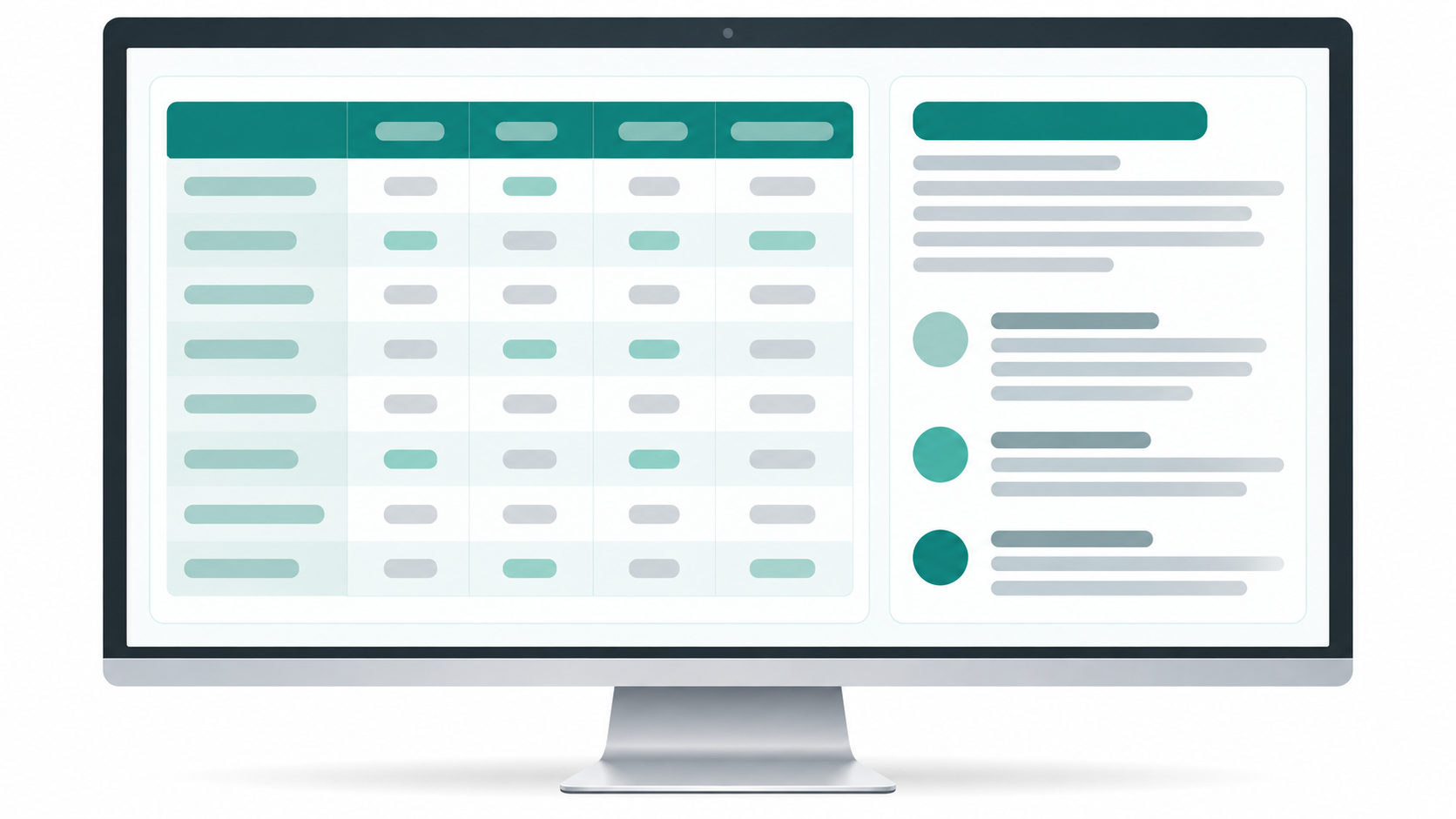
Tariffs, net load, battery state of charge and revenue come from the database and calculation logic. The language model explains calculated results instead of creating the numbers.
Regulatory checklist items are linked to quotations from uploaded source documents. The design aims to avoid inventing obligations that do not appear in those sources.
Approved answers and L0–L3 approval levels
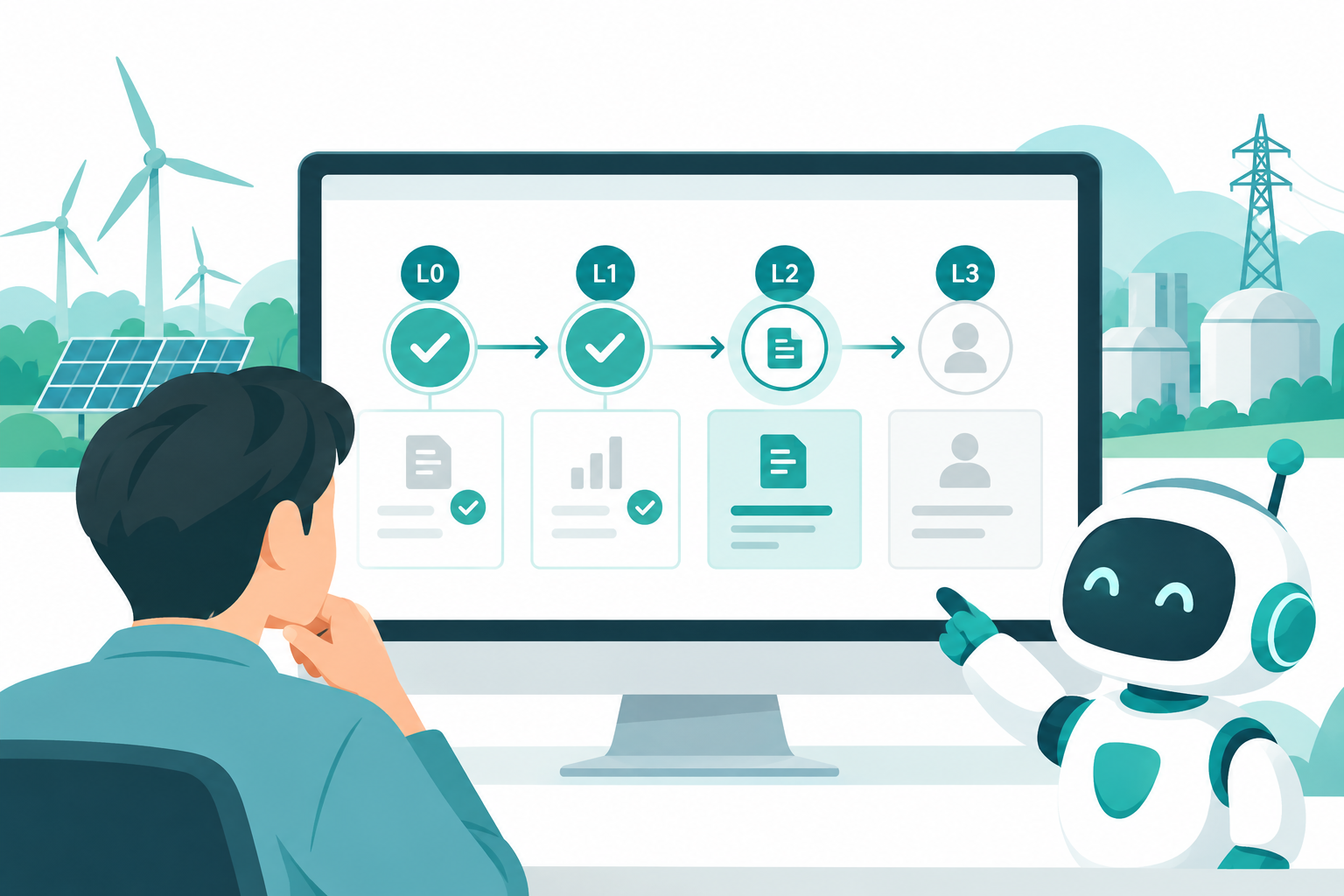
Automation operates within approval levels L0 through L3. The intention is to keep work requiring human review from being handled by AI alone.
Only approved answers enter the in-house language model's training data. This separates tasks that may be automated from those that require human checking and limits the reuse of unverified responses.
On-premises GPUs and isolated networks
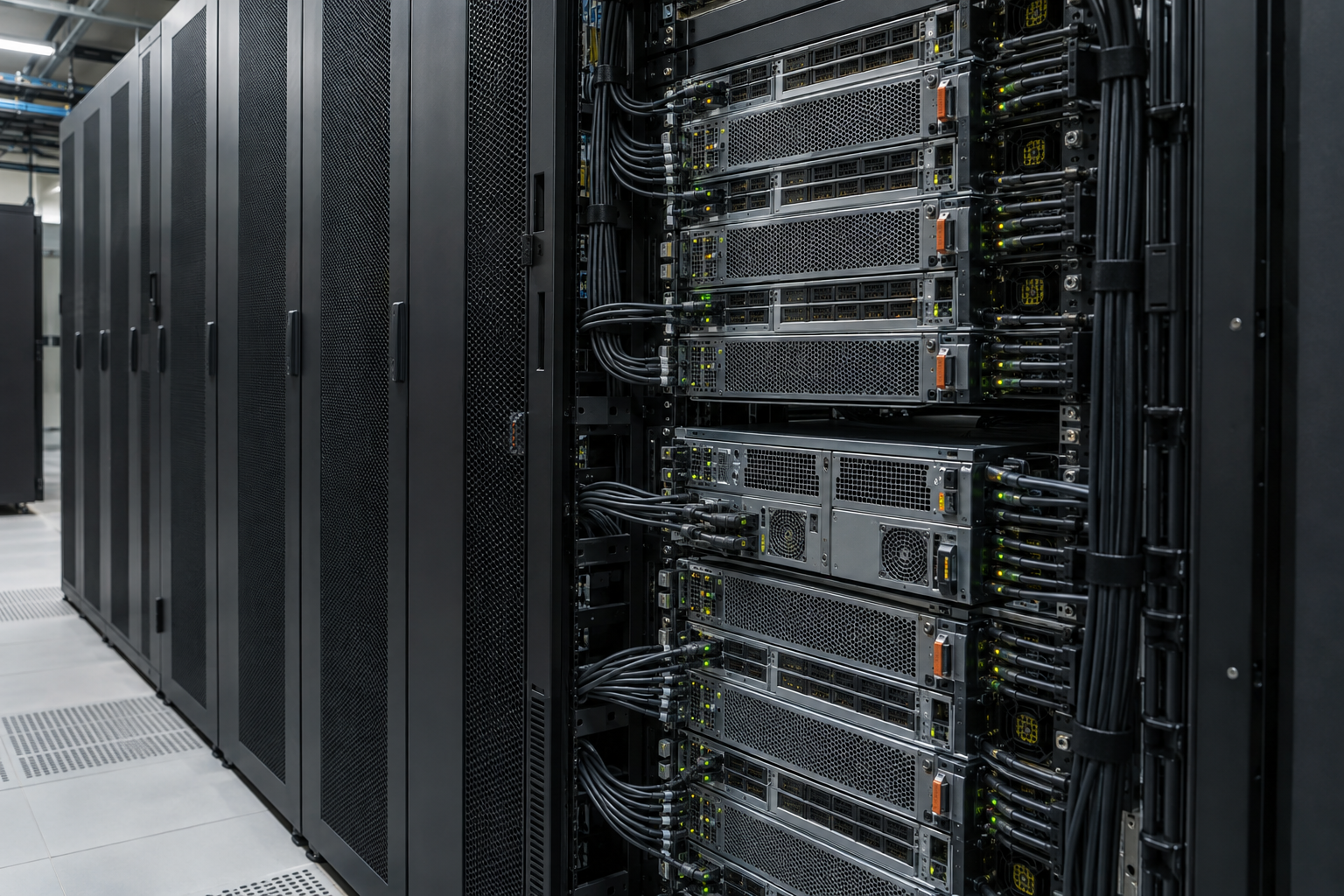
The language model is designed to run on in-house GPUs, with external models optional. The architecture is intended to keep generation and consumption data within the organisation.
Reduced dependencies are intended to support isolated-network environments, including settings with strict security requirements. Electricity-use records can reveal household routines and therefore need appropriate protection.
A cycle of source, data, knowledge and learning
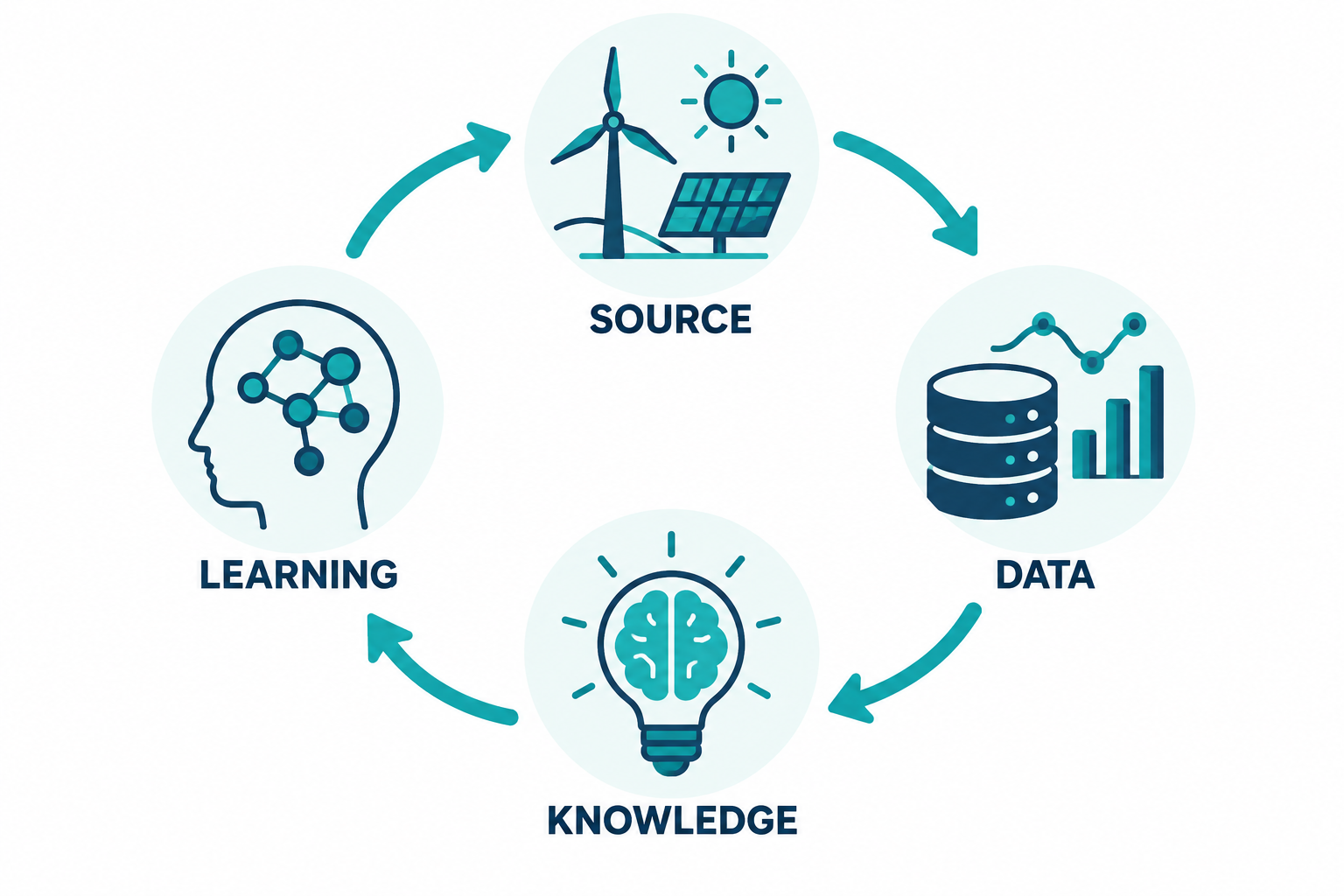
The platform extracts specifications from operating source, creates facts through metering and forecasting, organises those facts as evidence-backed knowledge, and accumulates approved conversations for training.
The trained model is intended to assist earlier stages again. The public introduction describes 13 operating dashboards supporting this flow; this is a platform description rather than an independently verified performance result.